
Here’s something most people don’t realize. Your zirconia crown is probably stronger than your natural tooth… but it can still be damaged by the wrong toothpaste.
It won’t crack. It won’t suddenly change color. But over time, the wrong product can dull the surface, irritate the gums, and quietly shorten its lifespan. And that usually happens without you noticing.
So, the real question isn’t which brand looks impressive on the shelf. It’s what kind of toothpaste actually protects your crown long term. Let’s break it down.
Why choosing the right toothpaste for zirconia crowns matters
Zirconia is incredibly strong, that’s true. Its flexural strength often exceeds 900 MPa. It doesn’t crack easily. But strength and surface health are two different things. The real issue isn’t breaking the crown. It’s damaging the polish.
Zirconia crowns are polished to be extremely smooth. That smoothness reduces plaque retention. If you regularly use highly abrasive whitening or charcoal toothpastes, you slowly scratch that surface. Then, microscopically, it becomes rougher. And rough surfaces hold more biofilm. That’s not opinion, that’s documented. Surface roughness directly increases bacterial adhesion, as shown in research.
Now think about the gum margin. That tiny line where the crown meets your natural tooth. If plaque accumulates there, inflammation starts. Redness. Bleeding. Maybe recession over time.
Also, aggressive whitening toothpastes don’t even benefit zirconia. Zirconia doesn’t respond to teeth whitening agents like enamel does. So, you’re basically adding abrasion without any cosmetic gain.
So, what should you use? A low-abrasive fluoride toothpaste. No heavy “extra white” formulas.
How toothpaste can affect dental restorations?
People don’t usually connect toothpaste with crown or veneer problems. But they should. Because what you brush with every single day matters more than most patients realize.
Think about it like this. Restorations are engineered surfaces. Crowns, veneers, composite fillings… they’re polished very carefully so they stay smooth. That smoothness isn’t cosmetic only. It protects the margins and keeps bacteria from clinging too easily. When you use very abrasive toothpaste, especially strong whitening or smoker formulas, you slowly dull that finish.
Now here’s where it gets interesting. Once the surface becomes slightly rougher, plaque retention increases. That’s not just theory. Surface roughness has been shown to correlate with increased biofilm accumulation in multiple dental material studies. And more biofilm around a restoration margin means a higher risk of gum inflammation and secondary caries at the edges.
There’s another angle too. Some restorations, especially composite fillings, can actually wear faster with abrasive toothpaste. Over time, they lose gloss, stain more easily, and may need polishing or replacement earlier than expected.
What type of toothpaste is best for zirconia crowns?
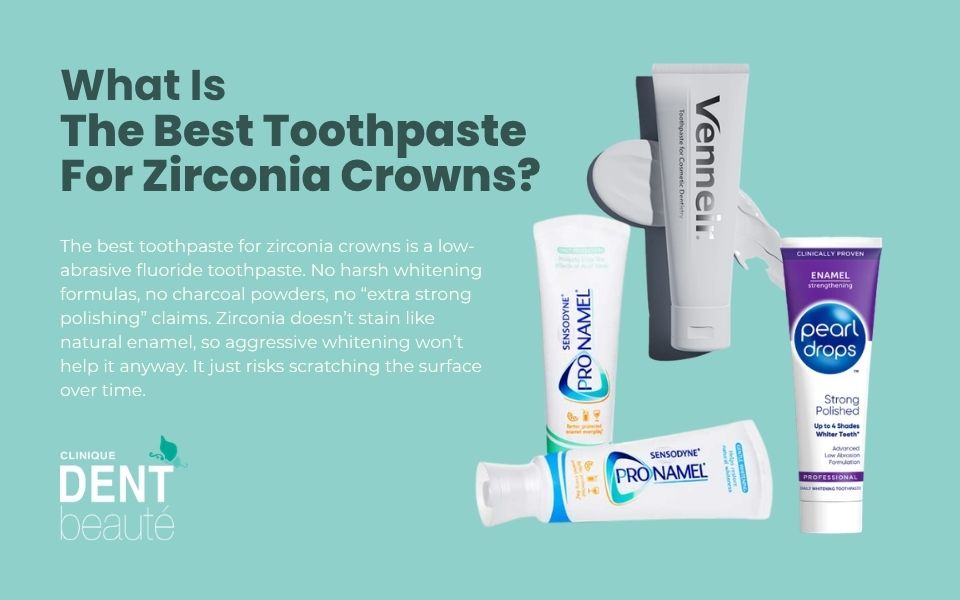
You need something gentle. The best toothpaste for zirconia crowns is a low-abrasive fluoride toothpaste. That’s it. No harsh whitening formulas, no charcoal powders, no “extra strong polishing” claims. Zirconia doesn’t stain like natural enamel, so aggressive whitening won’t help it anyway. It just risks scratching the surface over time.
Professional care for zirconia crowns
There’s more you can do than just “brush and come for a check-up.” We follow some professional protocols for zirconia crowns in Istanbul.
First, regular exams are non-negotiable. Not just to look at the crown, but to check the tooth underneath. Zirconia doesn’t decay, but the natural tooth structure at the margin can. Small leakage, early decay, bite stress… these are things we catch early with proper follow-ups and sometimes a small X-ray.
Second, professional cleaning should be done with the right instruments. Metal scalers used aggressively can scratch polished ceramic surfaces. We prefer appropriate ultrasonic tips and polishing protocols that preserve the smooth finish. Smooth surface = less plaque retention.
Third, bite analysis. If the bite is off, stress transfers to the tooth root or surrounding bone. That’s where problems begin.
If you’re a grinder, we evaluate for bruxism properly. A night guard is often essential. It protects not only the crown but the opposing teeth too. Zirconia can wear down the opposing enamel if forces are excessive.
We also monitor gum health closely. Probing depth around the crown margin. Checking for bleeding. Early signs of inflammation are subtle. And once recession happens, that margin becomes exposed.
For patients with dry mouth, acid reflux, or high caries risk, we sometimes recommend fluoride varnish applications or prescription-strength fluoride toothpaste.
And here’s something many forget… lifestyle review. If someone drinks a lot of acidic beverages or uses abrasive whitening products, we talk about that. Small habit changes protect the margins long term.
Regular dental check-ups
Regular dental check-ups might seem routine, but honestly, they’re what keep small crown issues from turning into bigger problems over time.
- Crown margins are checked for leakage
- Gum health around the crown is evaluated
- Bite pressure is carefully tested
- X-rays are taken if needed
- Early decay under margins is detected
- Plaque and tartar are professionally removed
- Grinding signs are assessed
- Opposing teeth wear is examined
- Small adjustments are made before bigger problems start
Professional polishing of zirconia crowns
They don’t need polishing all the time like natural teeth sometimes do. But after a few years, tiny changes can happen. The surface might not feel as slick as it once did.
When that happens, a quick professional polish can freshen it up. Nothing aggressive. Just enough to bring back that glassy feel.
FAQ
Can you use whitening toothpaste on zirconia crowns?
No, whitening toothpaste won’t make zirconia crowns any whiter. Because the material doesn’t respond to bleaching agents. Honestly, using highly abrasive whitening formulas can even dull the surface over time. So, it’s better to stick with a gentle toothpaste.
Can charcoal toothpaste damage zirconia crowns?
Yes, charcoal toothpaste can slowly scratch and dull the polished surface of zirconia crowns because it tends to be quite abrasive.
How to keep zirconia crowns looking white
You keep them white by keeping them clean, not by whitening them. Because zirconia doesn’t really change color like natural teeth do. Use a gentle toothpaste, clean well around the gum line, and stay consistent with check-ups so the surface stays smooth and stain-free.
Which brands of toothpaste can I choose for zirconia crowns?
It’s not about a specific brand so much as the type. You should choose a low-abrasive fluoride toothpaste without heavy whitening or charcoal particles. It is better to use products labeled “low abrasion” or “enamel safe,” because those formulas clean well without roughening the crown surface.