
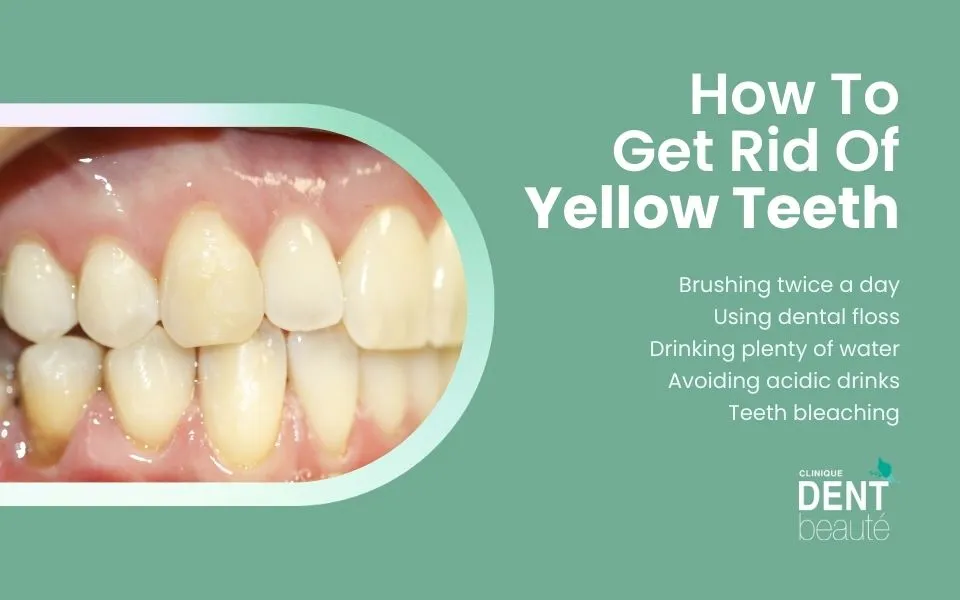
Yellow stains on teeth can be removed most effectively and permanently through professional teeth whitening procedures carried out under the supervision of a dentist or through detailed tooth surface cleaning (polishing). While whitening toothpastes can be helpful in daily care for superficial yellowing, it should be noted that stubborn discolouration that has penetrated the enamel or black lines near the gum line cannot be removed using home methods. The only reliable way to restore natural whiteness without damaging the enamel is to perform a medical intervention appropriate to the source of the stain.
What causes yellow stains on teeth?
To understand tooth discolouration, the structure of a tooth can be compared to a window in a house. On the outermost layer of the tooth is a protective coating called enamel, which is very hard and semi-transparent, like glass. Immediately beneath this layer is the dentine, which forms the main body of the tooth and has a naturally light yellow colour. Tooth yellowing occurs primarily through two main mechanisms: either the enamel is stained or it has become thinner.
Unfortunately, many things we enjoy in our daily lives are among the biggest enemies of our teeth. Natural dyes in the foods and drinks we consume settle into the microscopic pores of the enamel. Just as coffee spilt on a white T-shirt leaves a stain, teeth lose their brightness when constantly exposed to these substances. It is particularly noticeable that certain foods and habits accelerate this process at an incredible rate.
The most common external factors known to cause tooth discolouration are:
- Tea
- Coffee
- Cigarettes
- Red wine
- Cherry juice
- Soy sauce
- Curry powder
- Beetroot
The common feature of these foods is that they contain strong colour pigments. For example, substances found in tea and coffee stick to the tooth surface like glue. If the tooth surface is rough, this adhesion occurs much faster. Smoking is a separate issue altogether. Tobacco smoke leaves tar and nicotine in the pores of the teeth. Although nicotine appears colourless, it turns yellow when it comes into contact with oxygen and forms a stubborn layer that penetrates deep into the tooth structure.
Another important cause of yellowing is ageing, which is a completely natural process. Over the years, the glass-like enamel layer that protects the teeth wears down and thins due to chewing forces and acidic foods. As the enamel thins, the colour of the underlying yellow layer becomes more prominent. Therefore, the appearance of darker and duller teeth with age is not a disease but part of the body’s natural cycle.
Sometimes the problem begins during the formation of the tooth. Feverish illnesses experienced in the womb or during infancy, and the use of certain strong antibiotics, can permanently affect the structure of the tooth. In this case, the stain is not on the surface but within the tooth structure and cannot be removed by conventional cleaning methods.
What should be done to remove yellow stains on teeth?
When bothered by the appearance in the mirror, the first step should be to calmly analyse the situation rather than panic and resort to hearsay. This is because not all yellow stains are the same and each stain requires a different solution. It should not be forgotten that applying the wrong method based on an incorrect diagnosis can cause irreversible damage to the teeth.
Firstly, your daily oral care routine should be reviewed. You should check how many times a day you brush your teeth and whether the toothbrush you use is too hard or too soft. You should examine whether you use dental floss. Yellowing that usually starts between the teeth and at the gum line is generally a sign of inadequate cleaning. Bacterial plaque that accumulates on the tooth surface absorbs the colour of the food and drink consumed over time, turning into a yellow or orange coating. If no action is taken at this stage, this coating hardens and turns into tartar.
The basic practices required to remove yellow stains from teeth are as follows:
- Brushing twice a day
- Using dental floss
- Drinking plenty of water
- Avoiding acidic drinks
- Using a straw
To elaborate on these points, acidic drinks soften the enamel, opening the pores and allowing stains to penetrate more easily. Using a straw when drinking cola or fruit juice is a simple but effective measure, as it reduces contact between the liquid and the teeth. Furthermore, rinsing the mouth with water immediately after eating or drinking something coloured significantly reduces the risk of staining substances adhering to the teeth.
However, the healthiest and most definitive solution is to consult a dentist. The dentist will determine the type of stain. They may say, ‘This is just a superficial tea stain; it will go away when cleaned,’ or determine that, ‘This is the natural colour of your teeth; a whitening procedure is required.’ It is not possible for a person to make this distinction at home.
How to fix yellow teeth
On the internet, social media, or in conversations with neighbours, one often comes across miraculous natural recipes that promise to make teeth sparkling white. It is said that wonders can be created using ingredients found in the kitchen. However, this is the most important point to be clearly addressed from a medical perspective. It should not be forgotten that almost all methods claimed to be natural and applied at home work on the principle of damaging the teeth through abrasion.
These methods, while removing stains from the tooth, also grind away the enamel, which is the tooth’s most valuable asset. It should be remembered that once enamel is scratched or worn away, it cannot be regenerated by the body. A tooth with a scratched and roughened surface may appear whiter at first, but it will soon become noticeably yellower than before, and this discolouration will occur much faster and be more permanent. This is because the rough surface acts like a magnet, attracting stains.
The following are common practices among the general public but are absolutely not recommended by dentists:
- Baking soda
- Lemon juice
- Vinegar
- Strawberry purée
- Salt
- Activated charcoal powder
- Turmeric
The combination of baking soda and lemon is particularly detrimental to teeth. Baking soda particles scratch the teeth due to their hard texture, while lemon acid dissolves enamel. When these two combine, the tooth’s protective layer is removed. It should not be forgotten that teeth become vulnerable, sensitivity begins, and even drinking cold water can cause pain.
Activated charcoal or black toothpaste, which have recently become popular, carry similar risks. Scientific data on how much these products erode enamel are not yet sufficient to confirm their safety. While seeking to whiten teeth, the risk of making them dull, lifeless and grey in appearance should not be overlooked.
The only safe measure at home is to use whitening toothpastes from reliable brands recommended by a dentist. However, it should be remembered that these toothpastes should not be used continuously but at specific intervals, as they can be more abrasive than regular toothpastes.
What is the most effective treatment for yellow tooth?
Professional teeth whitening (bleaching) is recognised as the safest, most effective and scientific way to get rid of yellow stains, lighten tooth colour and achieve your dream smile. It should be noted that this procedure uses technology that is incomparable to products purchased from the high street or home remedies.
The special gels used in this process do not abrade or scratch the enamel. On the contrary, they seep into the enamel and break down the coloured molecules that cause yellowing. A chemical reaction eliminates these coloured molecules. In other words, only the discolouring molecules within the enamel are removed without damaging its structure.
The basic teeth whitening methods used in dentistry are as follows:
Office teeth whitening
At-home teeth whitening
Office teeth whitening is the fastest method for achieving results. It is a procedure that takes approximately one hour in the dentist’s chair. First, a special protective barrier is applied to prevent damage to the gums. Then, a highly effective whitening gel is applied to the teeth. This gel is usually activated by a blue light or laser. The colour of the teeth lightens by several shades immediately after the procedure is completed.
At-home teeth whitening is a method carried out by the patient under the supervision of a dentist. The dentist takes impressions of the teeth and prepares custom-made, perfectly fitting transparent trays. Special gel is placed into these trays and must be worn for a certain amount of time each day (usually 4–6 hours or overnight). Remarkable results can be achieved within approximately 1–2 weeks.
How about saying goodbye to those unwanted yellow tones in your smile and making peace with mirrors? At our modern clinic, Clinique Dent Beauté, located in Istanbul, we whiten your teeth visibly in most cases with just one session using our state-of-the-art whitening systems. Leave coffee and tea stains in the past and gain a confident, pearly white smile. Contact us today, and together with our expert dentists, we will create the most suitable treatment plan for you (office or home).
Can yellow stains on front teeth be removed by brushing?
This question is one of the most frequently asked in dentistry, and the answer varies depending on the situation. This is because brushing has its limitations and not all stains can be removed.
The answer is YES in the following situations:
If the yellowing on the front teeth is a fresh layer that has accumulated on the outer surface of the tooth due to excessive consumption of tea, coffee or smoking in the last week, brushing will be effective. This superficial layer can be mechanically removed with stain-removing toothpastes and the correct brushing technique. Once the teeth are cleaned, their natural underlying colour is visible.
The answer is NO in the following situations:
If the yellowing is within the internal structure of the tooth, brushing will not help. For example, if the person is older and the enamel has thinned, brushing will not whiten the tooth. On the contrary, brushing too hard and further thinning the enamel will make the tooth appear even more yellow. Antibiotic stains, discolouration in teeth that have undergone root canal treatment, or genetically yellow teeth will not change with brushing. The toothbrush and toothpaste cannot penetrate the tooth; they only clean the surface.
In such cases, brushing should be continued (as it is essential for dental health) and a dentist should be consulted for an aesthetic solution. Whitening procedures or porcelain veneers applied to the front surface of the tooth produce excellent results for these deep discolourations that brushing cannot resolve.
FAQ-Yellow teeth
Why do teeth appear more yellow as we age?
This is a completely natural process. Over the years, the protective enamel on the outside of the tooth thins due to acidic foods and chewing forces. As the enamel thins, the underlying dentine, which is naturally yellow in colour, becomes more visible. This causes the teeth to appear darker and duller.
What should I do to prevent coffee and tea stains?
Rinsing your mouth with water immediately after consuming coloured foods such as coffee and tea greatly reduces the adhesion of staining substances to the teeth. In addition, brushing your teeth as soon as possible after consuming coffee and tea is very effective against staining. Apart from this, using a straw for acidic and coloured cold drinks is a simple but effective measure, as it reduces contact between the liquid and the teeth.